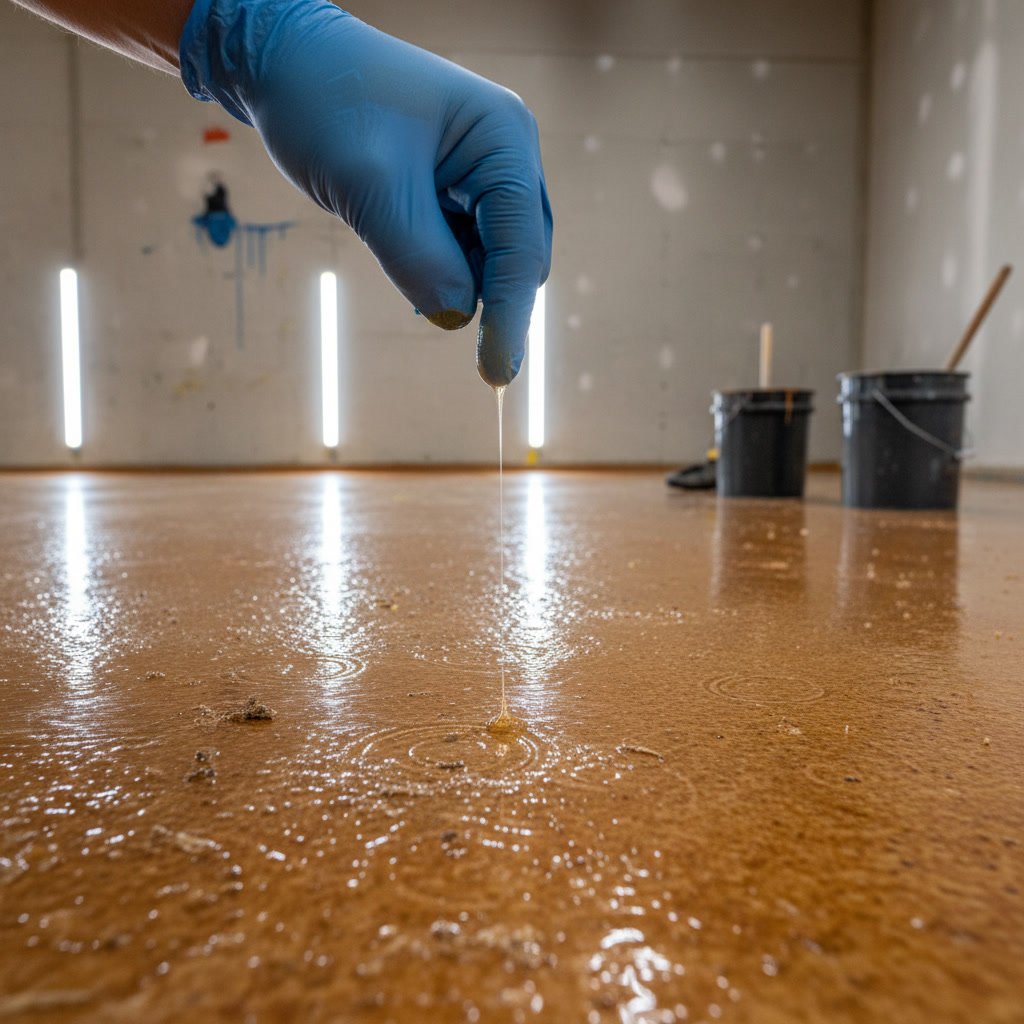
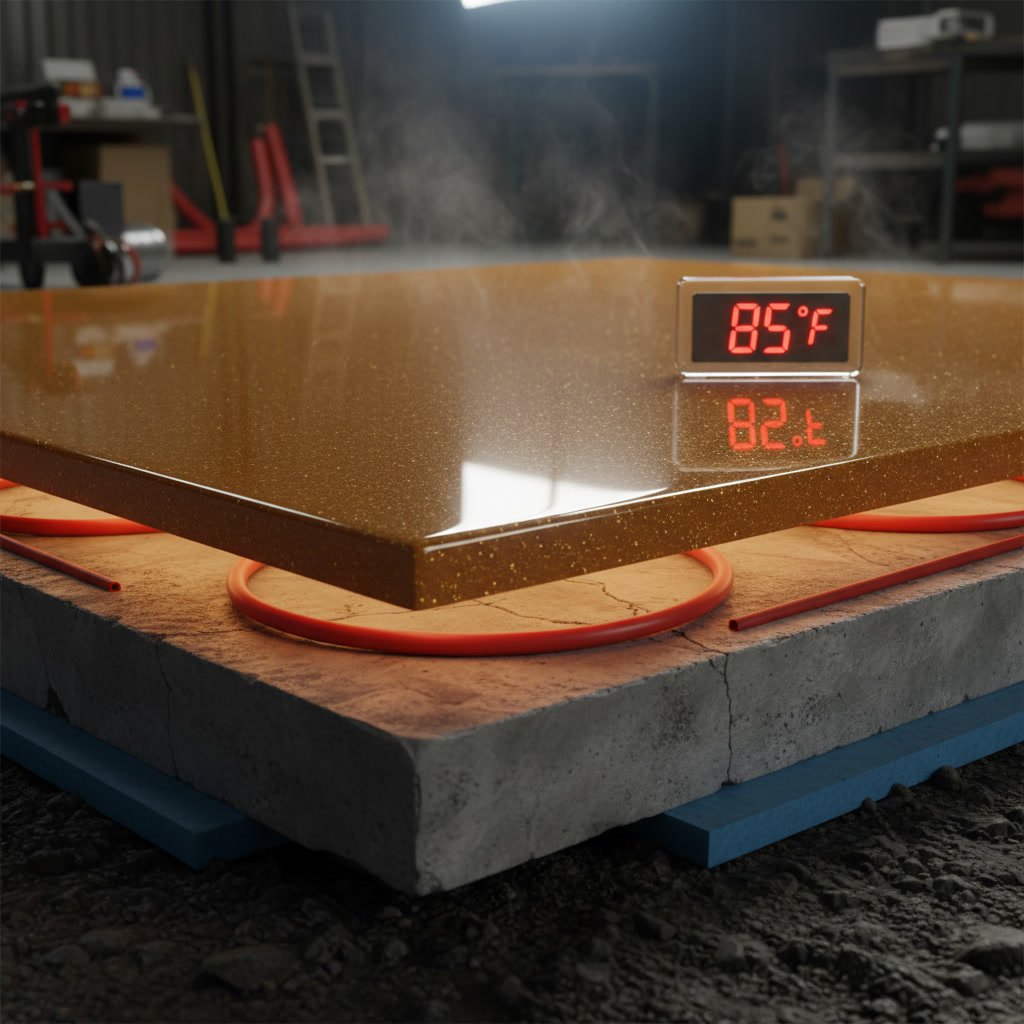
Applying epoxy floor coating over radiant heated concrete is possible and safe when done correctly. The key factors are proper temperature control during installation, thorough surface preparation, and using heat-tolerant epoxy formulations designed to withstand thermal cycling. When these conditions are met, epoxy radiant floor heating systems can coexist without compromising the durability of the coating or the efficiency of the heating system.
Understanding How Radiant Floor Heating Works
Radiant floor heating operates by circulating warm water through tubing embedded in the concrete slab or by using electric cables below the floor surface. The heat radiates upward, warming objects and people in the room rather than just the air. This method provides even, comfortable warmth without the drafts or hot spots typical of forced-air systems.
The concrete slab stores and releases heat gradually, which makes the system highly efficient. Floor surface temperatures typically range from 75 to 85 degrees Fahrenheit, though the concrete beneath may reach higher temperatures depending on system design and settings.
Why Homeowners Consider Epoxy Over Heated Floors
Concrete floors with radiant heat are popular in basements, garages, workshops, and main living areas. While functional, bare concrete can look industrial and may stain or dust over time. Epoxy floor painting offers a durable, attractive finish that resists moisture, chemicals, and abrasion while remaining easy to clean.
Many homeowners want the comfort of radiant heat combined with the aesthetic and protective benefits of epoxy. The question becomes whether the coating can handle the thermal stress without cracking, peeling, or yellowing.
Heat Tolerance and Epoxy Chemistry
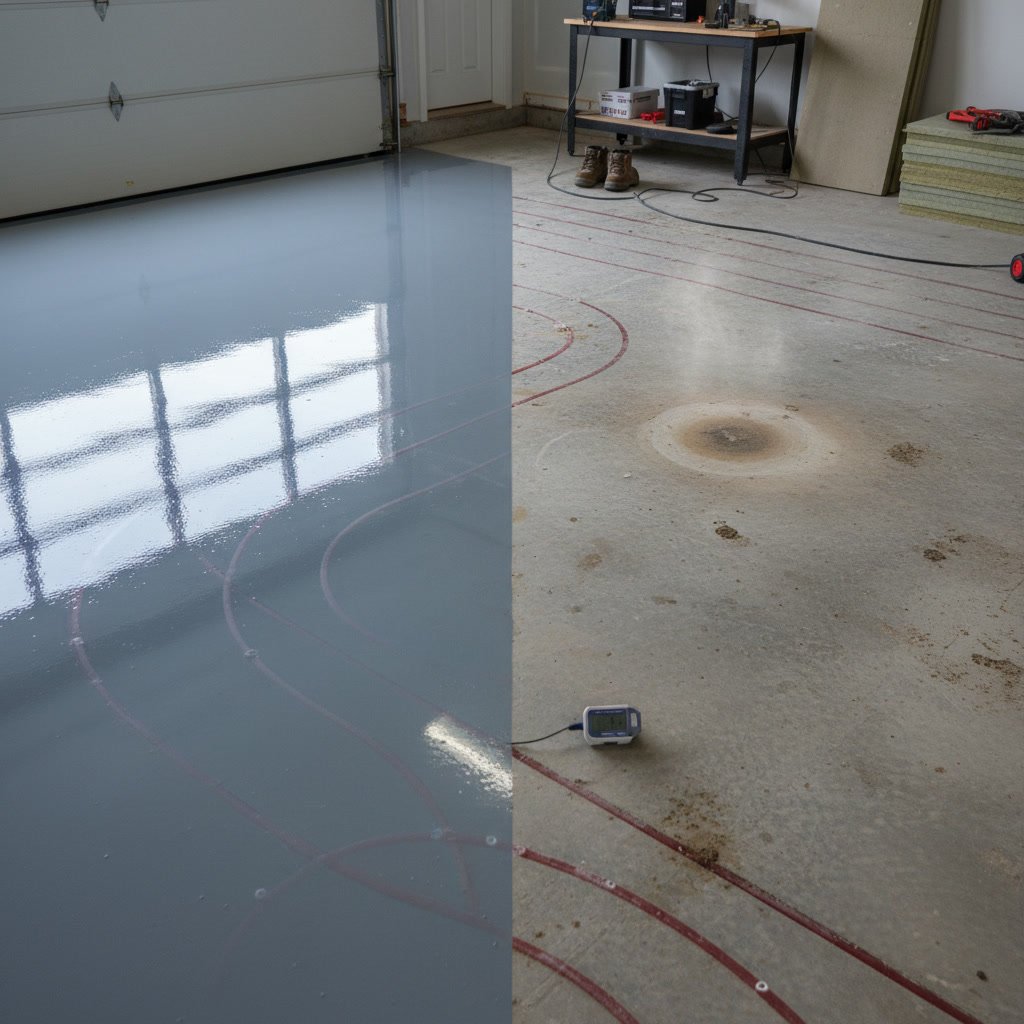
Standard epoxy coatings can typically handle temperatures up to 140 to 160 degrees Fahrenheit before softening or losing adhesion. Most residential radiant systems keep surface temperatures well below this threshold, making compatibility achievable with the right products.
Two-part epoxy formulations with heat-resistant hardeners perform better than single-component products. Look for epoxies rated for continuous exposure to temperatures at or above the maximum output of your radiant system. Some manufacturers produce specialized coatings designed specifically for heated substrates.
The curing process is equally important. Epoxy needs stable temperatures to cure properly. If the radiant system runs during application or curing, it can cause the coating to cure too quickly, leading to poor adhesion, bubbling, or uneven texture.
Steps to Safely Apply Epoxy in Wappingers Homes With Radiant Heat
First, turn off the radiant heating system at least 48 hours before starting surface preparation. The concrete must reach ambient room temperature to ensure proper cleaning and coating adhesion.
Second, prepare the concrete thoroughly. This includes cleaning, degreasing, and profiling the surface through mechanical grinding or acid etching. Proper preparation is critical for any epoxy application and becomes even more important when heat cycling will stress the bond over time. For detailed guidance, refer to our article on how to prepare concrete floors for epoxy coating application.
Third, apply the epoxy according to manufacturer instructions, maintaining room temperatures between 60 and 85 degrees Fahrenheit. Avoid applying epoxy if the concrete temperature is outside the recommended range.
Fourth, allow the epoxy to cure fully before reactivating the radiant heat. Most systems require at least seven days of curing time. Some manufacturers recommend 14 days for full hardness. Check the technical data sheet for your specific product.
Fifth, when restarting the radiant system, increase the temperature gradually over several days rather than turning it to full heat immediately. This allows the epoxy to acclimate to thermal expansion without sudden stress.
Common Mistakes That Lead to Coating Failure
The most frequent error is applying epoxy while the radiant system is still running or restarting it too soon after coating. The heat causes rapid curing, which traps solvents and moisture, leading to blistering and delamination.
Another mistake is using low-quality or inappropriate epoxy products. Bargain epoxy kits from big-box stores often lack the heat resistance needed for radiant floors. These products may look fine initially but fail within months as thermal cycling weakens the bond.
Skipping surface preparation or applying epoxy over dusty, contaminated, or poorly profiled concrete will result in poor adhesion regardless of heat. The coating may peel at the edges or lift in large sections once thermal stress begins.
Comparing Epoxy Options for Heated Floors
Solvent-based epoxies generally offer better heat resistance than water-based versions, but they require more ventilation during application and have longer cure times. Water-based epoxies are easier to work with and have lower odor, making them better for occupied homes, but verify the heat rating before use.
100% solids epoxy coatings contain no solvents or water, so they cure entirely by chemical reaction. These products provide the thickest, most durable finish and typically handle heat better than lower-solids formulations. They cost more but offer superior performance over radiant systems.
Polyurethane topcoats can be applied over epoxy base coats to add UV stability and scratch resistance. Some polyurethane products also improve heat tolerance. For a deeper comparison, see our post on epoxy versus polyurethane floor coatings for basements.
How Temperature Cycling Affects Long-Term Performance
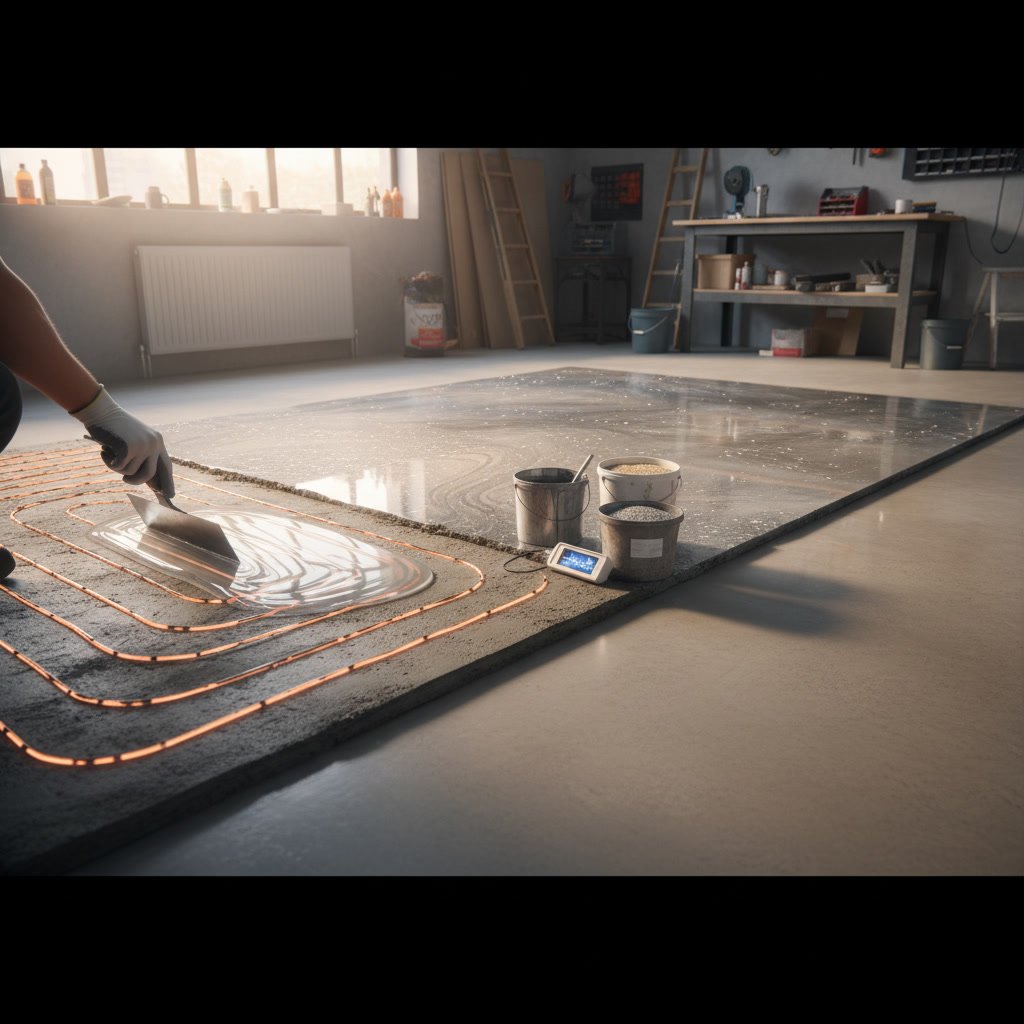
Every time the radiant system heats and cools, the concrete expands and contracts slightly. Epoxy coatings must flex with this movement without cracking or losing adhesion. Properly formulated and applied coatings can handle this stress for decades.
The bond between epoxy and concrete is stronger than the concrete itself when applied correctly. This means the coating moves as a single unit with the slab rather than separating. However, if the initial bond is weak due to poor prep or premature heating, thermal cycling will quickly expose the flaw.
In regions with cold winters, radiant systems may run continuously for months, then sit idle in summer. This seasonal cycling is less stressful than daily on-off cycles, but it still demands a durable coating with excellent adhesion and flexibility.
Professional Installation Versus DIY Application
Homeowners with experience in epoxy application and a good understanding of their radiant system can tackle this project themselves if they follow all manufacturer guidelines and allow adequate curing time. The challenge is controlling environmental conditions and ensuring flawless surface prep.
Professional contractors bring specialized equipment for concrete grinding, moisture testing, and temperature monitoring. They also carry insurance and warranties that protect you if something goes wrong. Residential painting services that specialize in epoxy coatings understand the nuances of working over radiant heat and can recommend the best products for your specific system.
The cost difference between DIY and professional installation is significant, but so is the risk of failure. A failed epoxy coating over radiant heat may require complete removal and reinstallation, which costs far more than hiring a qualified contractor the first time.
Maintaining Epoxy Floors Over Radiant Systems
Once cured and heat-cycled properly, epoxy floors over radiant heat require minimal maintenance. Sweep or vacuum regularly to remove grit that can scratch the surface. Mop with a pH-neutral cleaner and avoid harsh chemicals that may dull the finish over time.
Inspect the coating annually for signs of wear, especially in high-traffic areas. Small scratches or thin spots can be touched up before they become larger problems. If you notice any lifting, bubbling, or cracking, address it immediately to prevent moisture intrusion that could damage the radiant tubing or concrete.
Avoid placing rubber-backed mats directly on epoxy floors, as they can trap moisture and cause discoloration. Use breathable mats or go without, since epoxy provides a comfortable, non-slip surface on its own.
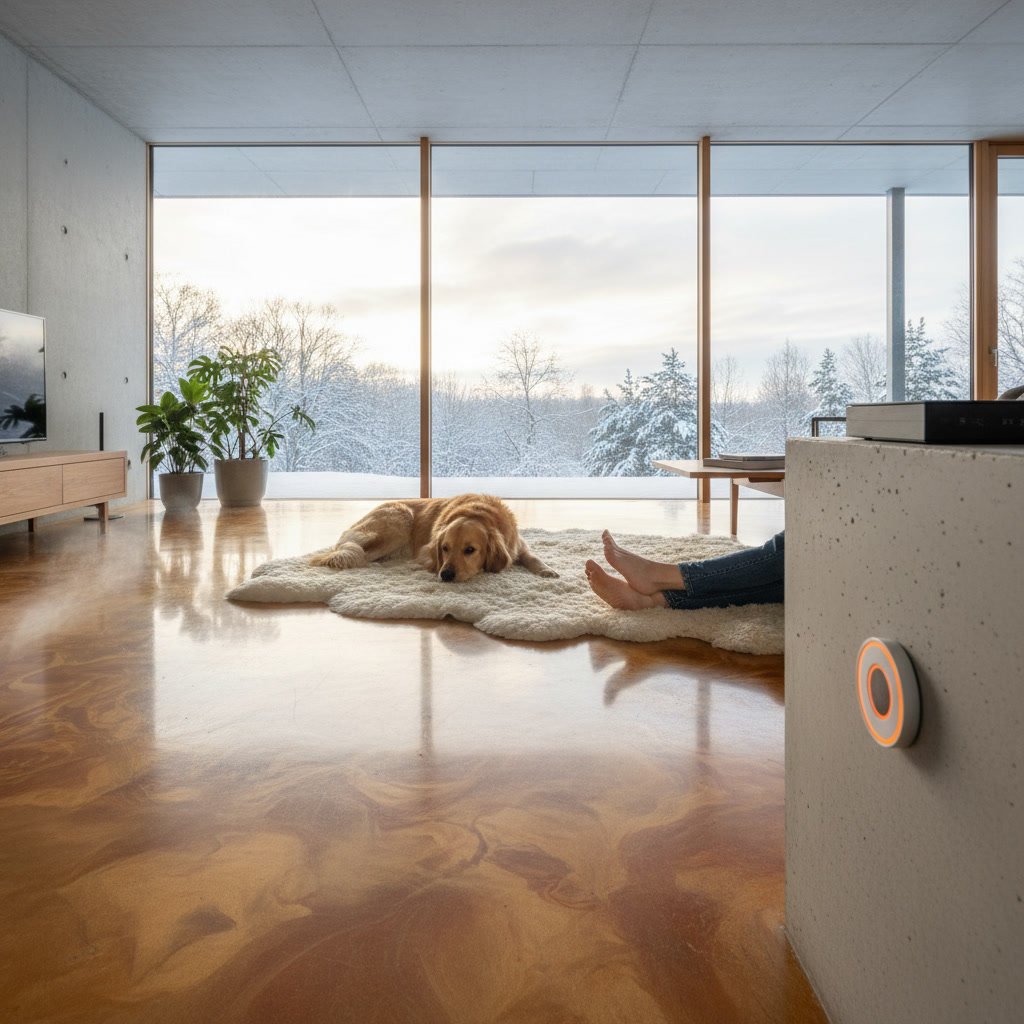
Real-World Considerations for Dutchess County Homeowners
Homes in Wappingers, NY and surrounding areas often feature radiant floor heating in basements and finished garages. The climate requires heating systems to run for extended periods during winter, making heat-resistant epoxy essential.
Local humidity levels also affect epoxy curing. Spring and fall offer ideal conditions with moderate temperatures and lower humidity. Summer heat and high humidity can extend cure times, while winter cold may require supplemental heating in unoccupied spaces, but never from the radiant system itself during application.
Getting the Best Results for Your Heated Floors
The combination of radiant floor heating and epoxy coating delivers comfort, efficiency, and beauty when executed properly. Success depends on choosing the right epoxy formulation, preparing the concrete meticulously, controlling temperatures throughout application and curing, and restarting the heating system gradually.
Homeowners who understand their radiant system’s specifications and work with experienced contractors achieve lasting results. The upfront investment in quality materials and skilled labor pays off in a floor that performs flawlessly through years of heating cycles.
JJv2 Interior House Painter Dutchess County LLC has served Dutchess County for over two decades, bringing hands-on expertise to every flooring project. Whether you need guidance on epoxy compatibility with your radiant system or a complete professional installation, our team provides the detail-driven service your home deserves. Reach out at +1 (845) 379-3306 to discuss your project and get a free consultation.