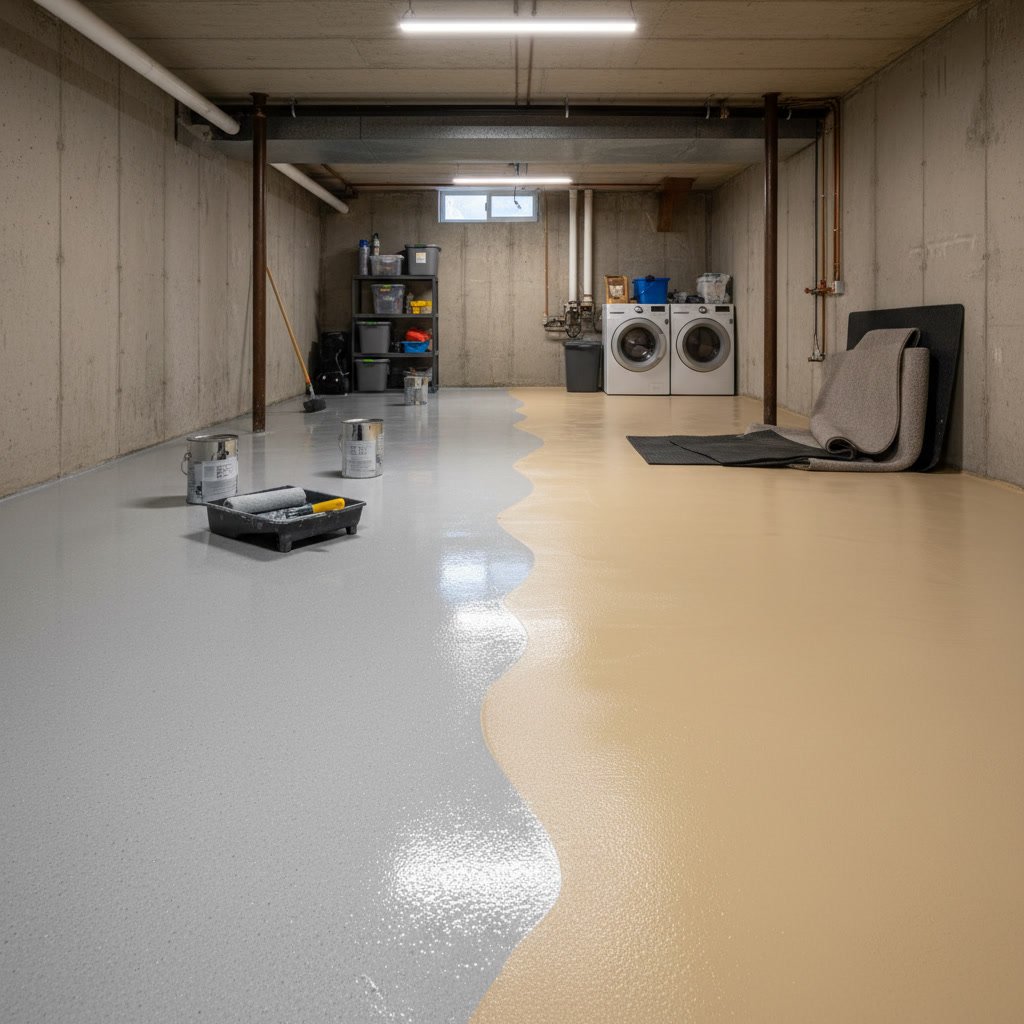
Choosing between epoxy vs polyurethane floor coatings comes down to your basement’s specific conditions and your priorities. Epoxy delivers a thick, durable surface ideal for high-traffic areas and resists chemicals, while polyurethane offers superior flexibility and UV resistance with a thinner application. Epoxy costs less upfront and works well in climate-controlled basements, but polyurethane handles temperature fluctuations and moisture better, making it the right choice for damp or unheated spaces.
Why Basement Floors Need More Than Paint
Most basement concrete remains exposed to moisture vapor rising from the ground, even with proper drainage systems in place. Standard floor paint cracks and peels within months because it cannot flex with concrete movement or resist water penetration. A proper coating system creates a barrier that protects the concrete, improves appearance, and prevents dust from concrete degradation.
Basements in Dutchess County face freeze-thaw cycles that cause concrete to expand and contract. Without a coating designed to move with the substrate, you end up with adhesion failures that require complete removal and reapplication. The right coating prevents these issues and extends the life of your concrete by decades.
How Epoxy Coatings Work
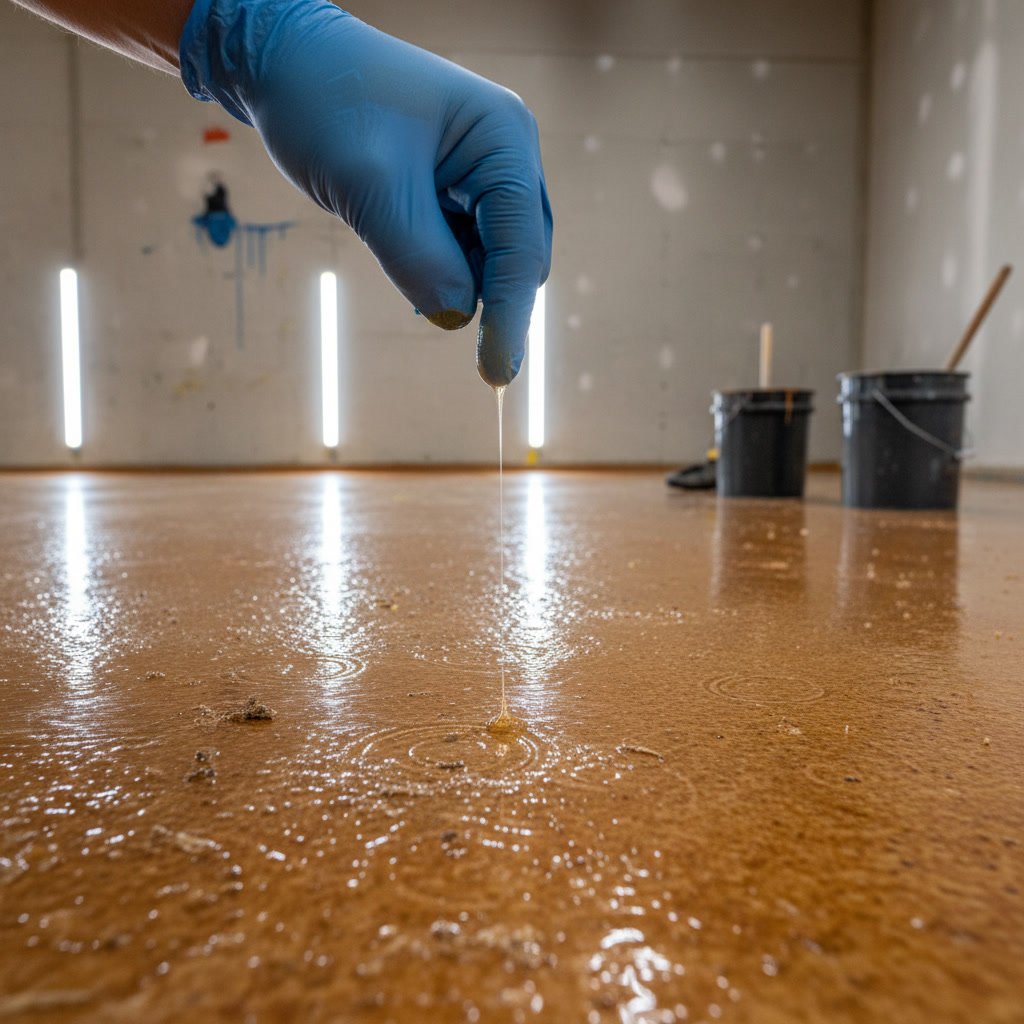
Epoxy consists of two components: resin and hardener. When mixed, a chemical reaction creates a rigid, plastic-like surface that bonds directly to concrete. The coating typically goes down in layers, with a primer coat followed by one or two topcoats, reaching a total thickness of 10 to 20 mils.
This thickness gives epoxy exceptional resistance to abrasion, impacts, and chemical spills. Garages, workshops, and utility areas benefit most from this durability. The coating fills small imperfections in concrete and creates a smooth, easy-to-clean surface. However, epoxy remains susceptible to UV degradation, which causes yellowing and chalking in areas with significant sunlight exposure.
Understanding Polyurethane Sealers
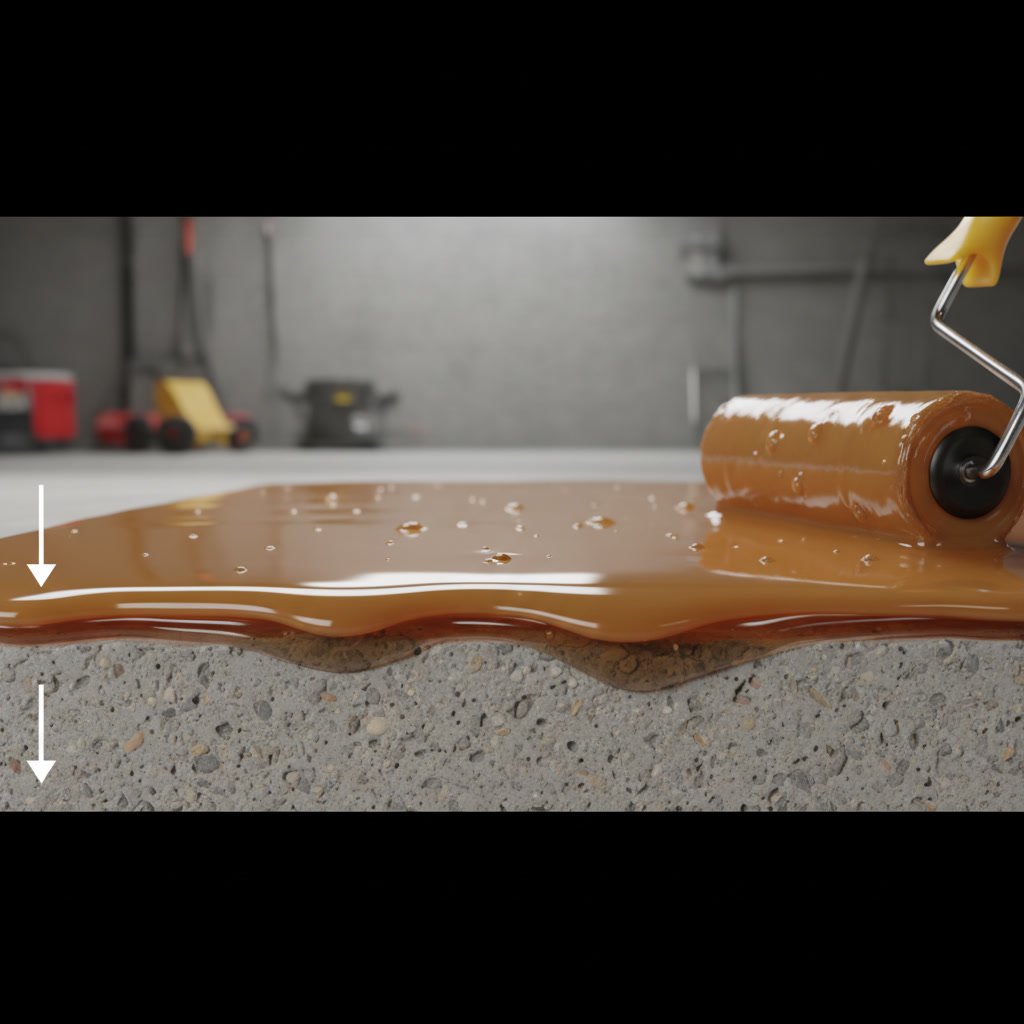
Polyurethane floor sealers cure through moisture in the air rather than a chemical reaction between two components. This creates a more flexible film, typically 2 to 5 mils thick, that moves with the concrete as temperatures shift. The thinner application means faster drying times and easier recoating if damage occurs.
The flexibility of polyurethane makes it resistant to scratching and abrasion in different ways than epoxy. While epoxy resists impact through hardness, polyurethane absorbs minor impacts without cracking. This coating also maintains its clarity and color under UV exposure, making it suitable for basements with window wells or walkout access.
Moisture Resistance Comparison
Moisture causes more basement floor coating failures than any other factor. Epoxy creates a strong barrier against surface water but remains vulnerable to vapor transmission from below. If your basement has ongoing moisture issues, epoxy can delaminate as pressure builds between the coating and concrete.
Polyurethane allows some moisture vapor to pass through while still protecting the surface. This breathability prevents the pressure buildup that causes coating failure. For basements without a vapor barrier under the slab or those with known moisture issues, polyurethane provides better long-term performance. If you notice water stains or efflorescence, addressing the source before any coating goes down remains critical, just as it does with water damage restoration services.
Temperature and Climate Considerations in Wappingers
Basement temperatures in this region can swing from below 50 degrees in winter to above 80 in summer, especially in unfinished or partially heated spaces. Epoxy becomes brittle in cold conditions and may crack along stress points. The rigid nature that provides chemical resistance becomes a liability when concrete contracts during temperature drops.
Polyurethane maintains flexibility across a wider temperature range. It expands and contracts with the concrete, reducing stress at the bond line. This makes it the better choice for basements that experience significant temperature variation or lack climate control. Finished basements with consistent heating benefit equally from either option.
Installation Requirements and Timeline
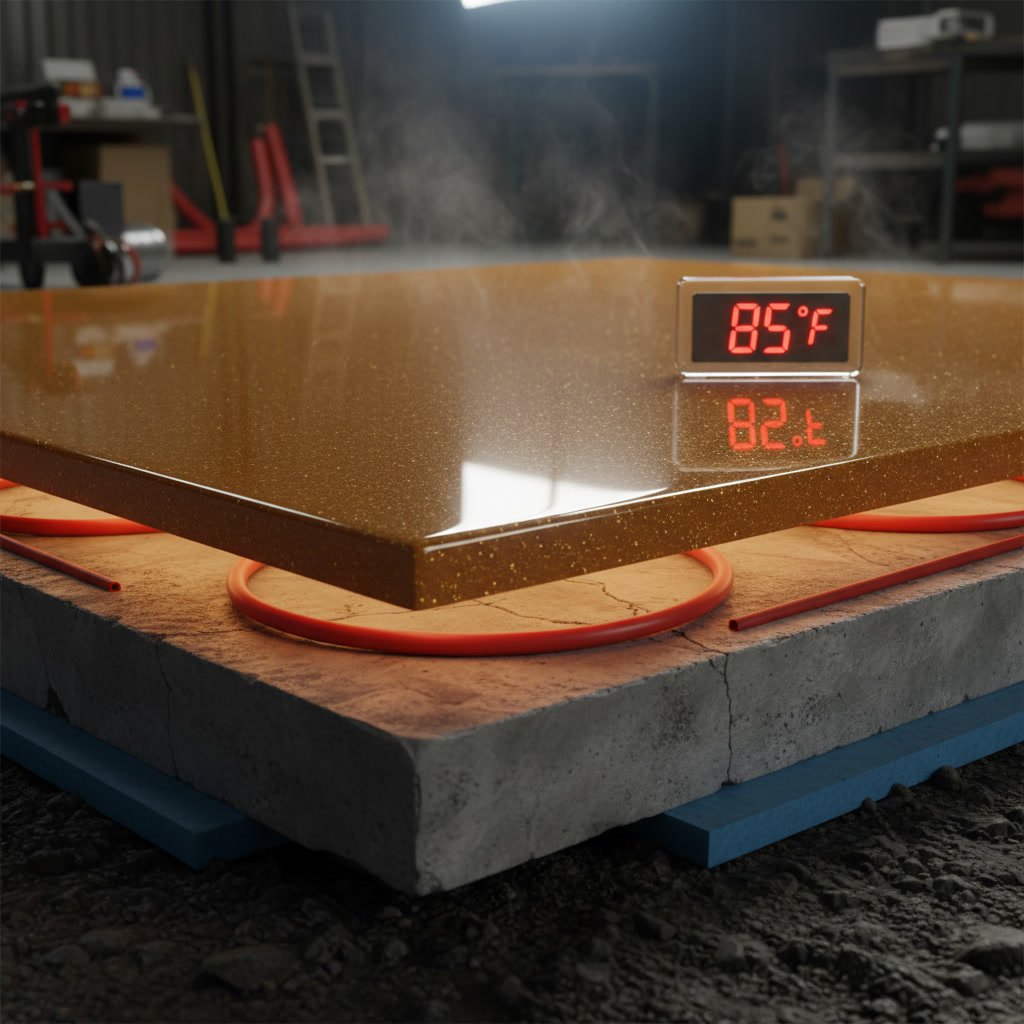
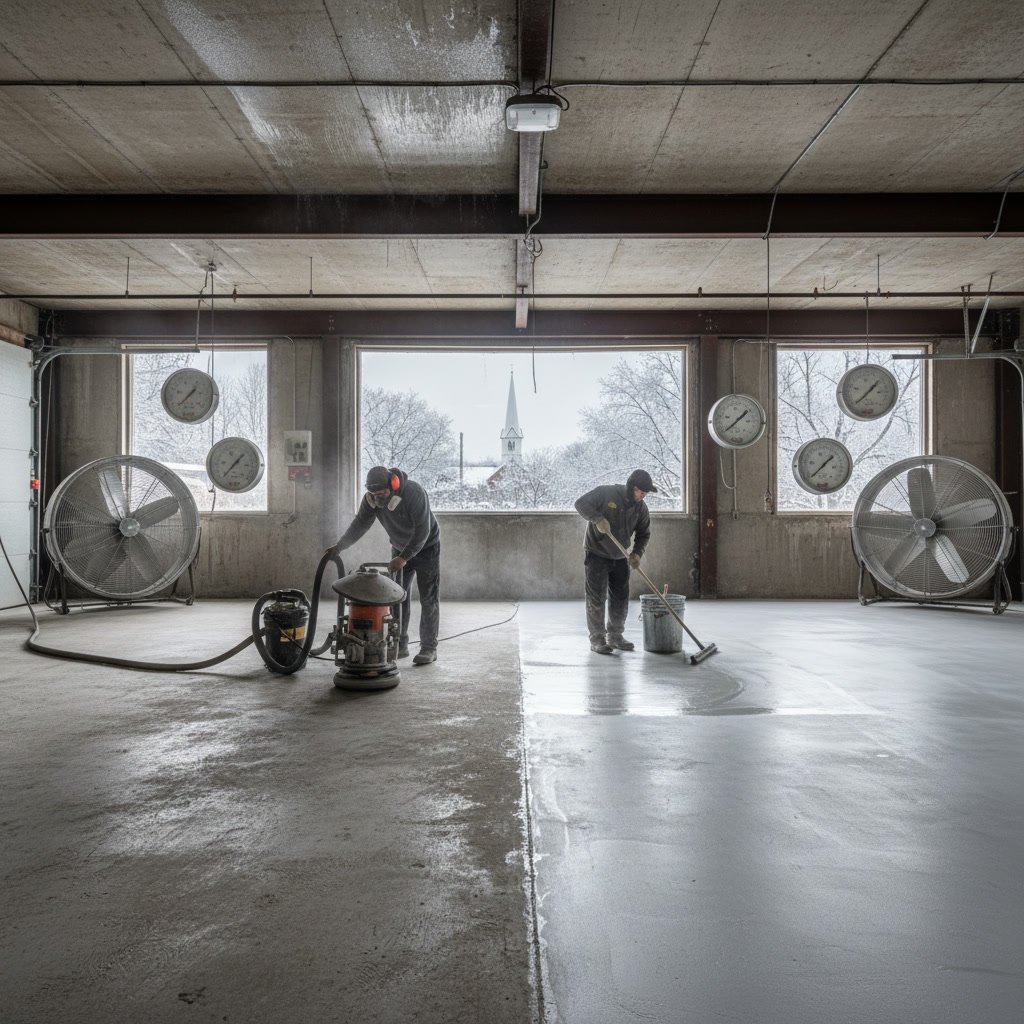
Epoxy demands careful surface preparation and specific environmental conditions. The concrete must be completely dry, with relative humidity below 75 percent and temperatures between 60 and 85 degrees. The coating process takes three to five days, including prep work, primer, base coats, and cure time before you can walk on the surface.
Polyurethane tolerates slightly higher humidity and a wider temperature range during application. Most formulations cure in 24 to 48 hours, allowing faster return to normal use. However, the thinner application means imperfections in the concrete show through more easily, requiring more aggressive grinding and patching during prep. Professional epoxy floor painting ensures proper surface preparation regardless of which coating you choose.
Cost Differences Between the Two Systems
Epoxy materials cost 30 to 50 percent less than polyurethane per square foot. A typical basement floor coating runs between $3 and $7 per square foot for epoxy versus $5 to $12 for polyurethane, including labor. The price gap narrows when you factor in longevity and maintenance costs over time.
Polyurethane lasts longer in challenging environments and requires less frequent recoating. Epoxy may need touch-ups or full recoats every five to seven years in high-moisture basements, while polyurethane can last 10 to 15 years under the same conditions. Calculate total cost over the expected lifespan rather than focusing solely on initial investment. These considerations mirror those in broader residential painting services, where durability often justifies higher upfront costs.
Maintenance and Long-Term Durability
Both coatings require minimal maintenance when properly installed. Regular sweeping and occasional mopping with pH-neutral cleaners keep the surface looking fresh. Epoxy resists staining from oil, grease, and most household chemicals, making cleanup simple. Avoid acidic cleaners that can etch the surface over time.
Polyurethane scratches more easily than epoxy but hides scratches better due to its flexibility. Small damage in polyurethane can often be spot-repaired by scuff-sanding and applying a new topcoat. Epoxy repairs require more extensive prep to blend properly. Neither coating handles constant standing water well, so address drainage issues before coating application.
Which Coating Fits Your Basement Needs
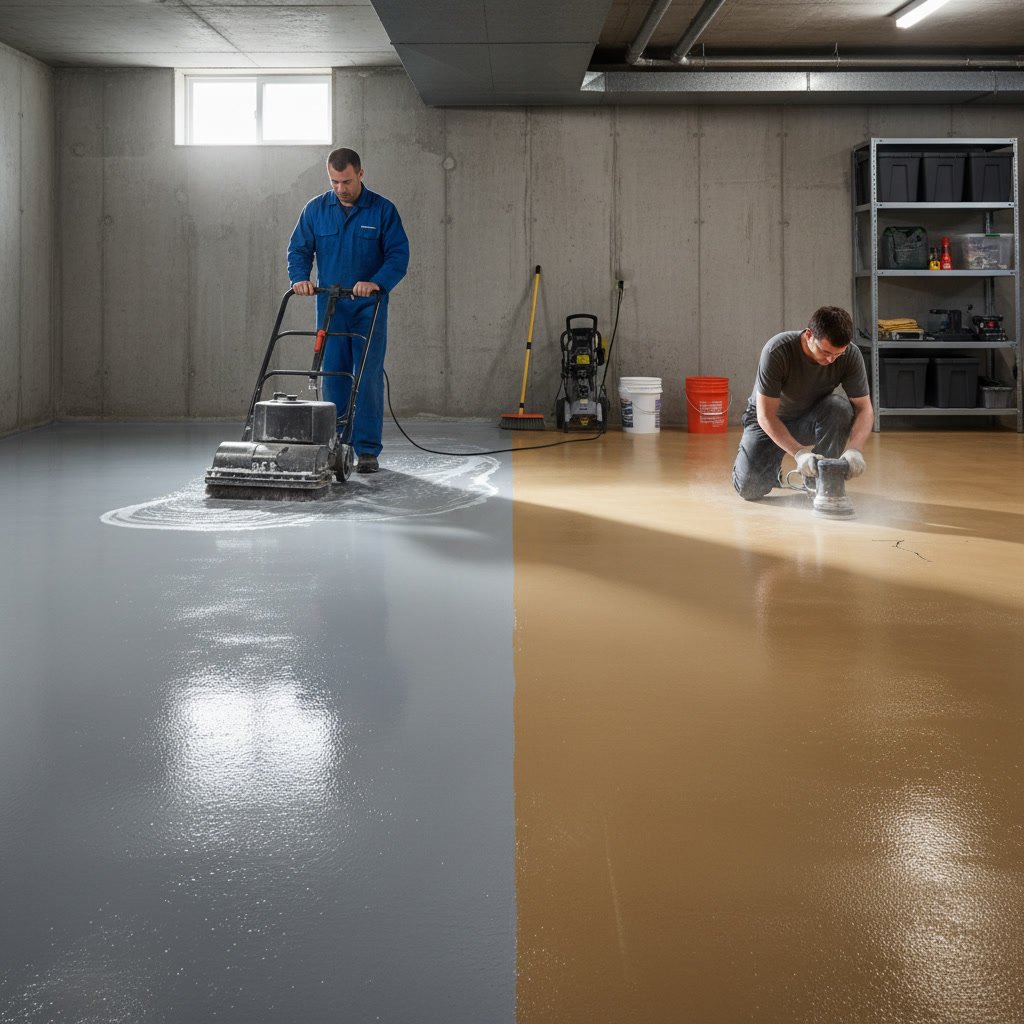
Choose epoxy if your basement stays climate-controlled year-round, you need maximum chemical resistance, or budget constraints limit your options. Workshops, hobby rooms, and finished living spaces with proper HVAC benefit most from epoxy’s durability and lower cost. The coating handles foot traffic, furniture, and general use without issue.
Select polyurethane for basements with moisture concerns, temperature fluctuations, or exposure to sunlight. Walkout basements, unfinished storage areas, and older homes without vapor barriers under the slab perform better with polyurethane’s flexibility. The coating adapts to challenging conditions that would cause epoxy to fail prematurely.
Making the Right Choice for Your Home
The best basement floor coating depends on your specific conditions rather than a one-size-fits-all recommendation. Assess your basement’s moisture levels, temperature stability, and intended use before making a decision. Epoxy delivers unmatched hardness and chemical resistance at a lower price point, while polyurethane offers flexibility and moisture tolerance that prevents common failure modes.
Both systems require professional surface preparation and application to perform as designed. Shortcuts during prep lead to adhesion failures regardless of which coating you choose. Testing concrete moisture levels, repairing cracks, and grinding the surface to proper profile make the difference between a coating that lasts years and one that fails within months.
JJv2 Interior House Painter Dutchess County LLC brings over 20 years of experience to every floor coating project, ensuring your basement gets the right system for long-term performance. We evaluate your specific conditions and recommend the coating that matches your needs and budget. Whether you need a durable workshop floor or a moisture-resistant surface for storage, proper preparation and expert application deliver results that last. Call +1 (845) 379-3306 to discuss your basement floor coating project and get a detailed assessment of which system works best for your space.